Finishing · 10 min read
Oil, Wax or Polyurethane? A Finish Picker for Every Project
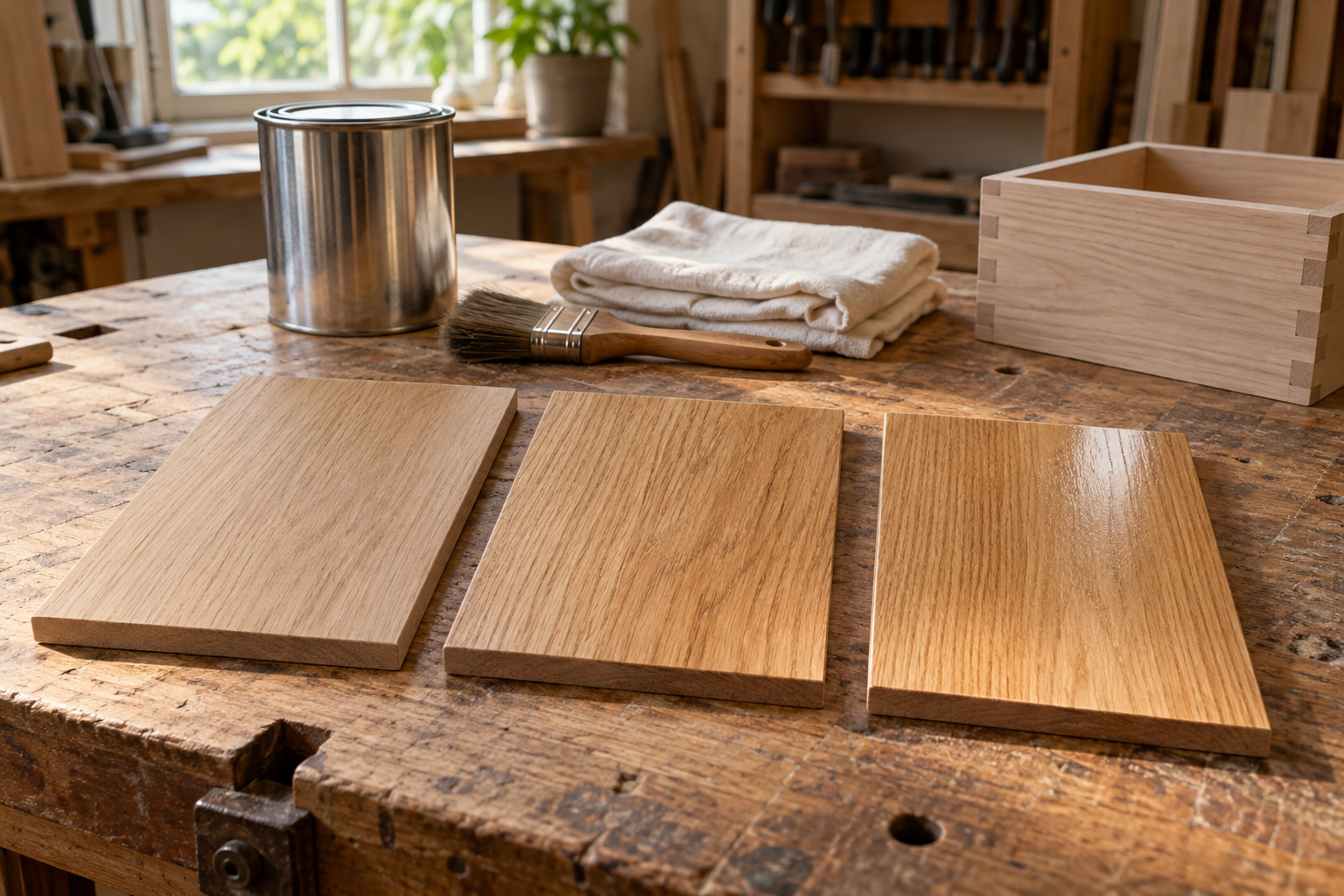
Choose polyurethane for furniture that faces frequent spills and cleaning, drying oil when natural feel and easy repairs matter most, and wax for low-wear decorative pieces. Cutting boards usually need a separate approach: food-grade mineral oil or a conditioner labeled for cutting boards. The right finish depends less on the wood species than on what will happen to the surface every day.
Oil vs. wax vs. polyurethane: a practical comparison
Think about three things before opening a can: exposure to water, tolerance for maintenance, and whether you want to feel wood or a protective film.
| Finish | Appearance and feel | Spill and wear protection | Repairability | Good starting uses |
|---|---|---|---|---|
| Pure drying oil, such as tung or linseed | Warm color; little surface build when wiped thin | Limited compared with a built film finish | Usually straightforward, though repairs may change color | Decorative furniture, carvings, lightly used woodwork |
| Paste wax alone | Soft sheen; smooth, low-build feel | Low; vulnerable to heat, cleaners, and standing water | Easy to renew, but contamination complicates later refinishing | Display pieces, decorative boxes, drawer runners |
| Hardwax oil | Low-build, natural-looking surface | Product-dependent; often better than simple oil or wax | Many products allow local repairs | Furniture and floors when specifically labeled |
| Oil-based polyurethane | Amber tone; noticeable film as coats build | High for ordinary indoor furniture use | Local repairs can leave visible edges | Dining tables, desks, stair parts |
| Water-based polyurethane | Usually clearer and less amber | High when using a suitable furniture or floor product | Local repairs can leave witness lines | Light-colored furniture, cabinets, busy shelves |
These are starting points, not a ranking of every can on the shelf. A floor-rated waterborne polyurethane can outperform a basic oil-based furniture product. Preparation, film thickness, and full cure matter as much as the finish category.
What does “oil finish” actually mean?
The front label is not enough. Products sold as Danish oil, teak oil, or tung oil finish may contain drying oil, varnish resin, solvents, or combinations of them. A “tung oil finish” is not necessarily pure tung oil.
Read the technical data sheet for ingredients, coat count, recoat timing, and intended uses. An oil-varnish blend behaves differently from pure oil, and neither should be confused with non-drying mineral oil.
Hardwax oil is another category, not simply paste wax mixed into oil at home. Some versions include reactive hardeners and strict mixing or application requirements.
Pick a wood finish by project
Dining tables, coffee tables, and desks
Polyurethane is the practical default when people will leave wet glasses, wipe up food, or drag keyboards across the surface. Choose water-based polyurethane to keep maple or birch relatively pale. Choose oil-based polyurethane if you want amber warmth on oak, cherry, or walnut.
Neither is hot-pan protection. Use trivets, and keep solvent-containing cleaners away unless the finish manufacturer approves them.
Hardwax oil is worth considering when you value a low-build appearance and accept maintenance. Test its resistance to coffee, wine, and your actual cleaner on a fully cured sample before committing to a large tabletop.
Bookshelves, cabinets, and bathroom furniture
Polyurethane suits shelves that get wiped regularly or hold frequently handled objects. Let it cure before loading books, rubber feet, or equipment; a surface that feels dry can still develop pressure marks or stick to objects.
For a vanity, choose a coating explicitly suitable for that exposure. Finish exposed end grain, sink cutouts, and vulnerable edges before installation. Finish helps with splashes, but it cannot compensate for leaking plumbing or standing water.
Avoid slow-curing, strongly scented oil finishes inside enclosed drawers and cabinets unless the product is intended for that use. Odor can linger much longer in a confined space.
Cutting boards and serving pieces
For a working cutting board, food-grade mineral oil or a cutting-board conditioner is a straightforward choice. Mineral oil does not cure, so it needs renewal as washing removes it. A mineral-oil-and-wax blend can slow water absorption somewhat, but it does not waterproof the board.
Do not choose polyurethane for a chopping surface: knives damage the film, and repairs become awkward. A serving tray that never sees a knife is a different use case. Follow the finish manufacturer's food-contact guidance and full-cure requirement rather than assuming every cured coating has the same approval.
Decorative boxes, carvings, and outdoor furniture
Oil is appealing on carvings because you can wipe away excess without building a thick film over detail. Wax works on a decorative box that will stay dry and receive little handling.
For outdoor furniture, move beyond this indoor comparison. Use an exterior-rated coating with an appropriate maintenance plan. Ordinary interior polyurethane, pure oil, or paste wax is not a dependable answer to sunlight and weather. Exterior clear finishes still require upkeep, especially on horizontal surfaces.
Appearance: test color and sheen on the actual wood
Make samples from project offcuts, not a different species from the scrap bin. Sand them exactly as you plan to sand the furniture, then apply the complete finish schedule.
Oil and oil-based polyurethane generally deepen color and highlight figure. That can make walnut look rich but push pale maple toward yellow. Water-based polyurethane usually changes color less, although some formulas deliberately add warmth.
For a useful test, prepare samples roughly 6 × 12 inches (152 × 305 mm). Look at them in daylight and under the room's actual lighting. Include end grain, which often absorbs finish differently.
Satin sheen can make a film finish less visually prominent, but it does not turn polyurethane into a penetrating oil. Stir satin products as directed so settled flattening agents are distributed evenly.
How to apply oil, wax, and polyurethane reliably
Prepare the wood without over-sanding
For many furniture projects, sanding bare wood through 120, 150, and 180 grit is a sensible starting sequence. Some products specify a coarser or finer stopping point, especially hardwax oils. Their instructions take priority.
The Sandpaper Grit Sequence Calculator helps plan the steps without leaving deep scratches behind. Inspect under low-angle light and remove dust with a vacuum and the cleaning method approved for the finish.
Ease sharp exposed edges lightly. About a 1/32-inch (0.8 mm) edge break can help a film finish cover a corner without substantially changing its appearance. Keep glue off visible surfaces; finish will reveal missed glue rather than hide it.
Applying a drying oil finish
Apply the specified amount, allow the recommended penetration time, and wipe away excess thoroughly. Check again for oil bleeding from pores or joints.
The common failure is leaving a glossy wet layer because it looks good. Many wipe-on oil schedules depend on removing that excess; leaving it can create sticky patches or wrinkles.
Pure tung oil may require multiple coats with long waits between applications. Boiled linseed oil products often contain drying agents. Neither should be treated as an automatic food-contact choice without checking the specific product.
Applying paste wax or hardwax oil
Paste wax works best in a very thin coat. Allow the recommended haze time, then buff. A thick application mainly creates extra work and residue in corners.
Hardwax oil requires its own instructions. Some products call for extremely thin coats, machine buffing, or a measured hardener ratio. Do not borrow the application method from a different brand or assume more coats mean more protection.
Applying polyurethane
Use a compatible brush, pad, or other applicator recommended on the label. Spread a controlled coat and stop working it once it begins to tack. Overbrushing often leaves marks and bubbles.
Many brush-on furniture schedules use two or three coats; thin wipe-on products often need more to build comparable protection. Follow the specified coverage and coat count rather than treating all polyurethane as equally concentrated.
When sanding between coats is required, 220–320 grit is common, but use the product's direction. Sand lightly enough to remove nibs without cutting through edges. Water-based finishes can raise grain on the first coat; smooth it as directed before continuing.
Finish coverage, cost, and drying time
Finish prices vary by retailer, package size, and formulation. These are estimated US material prices, not quotes:
| Finish type | Typical package | Estimated price |
|---|---|---|
| Food-grade mineral oil | 16 fluid ounces | $8–$18 |
| Pure tung oil or boiled linseed oil | 1 quart | $18–$45 |
| Paste wax | About 1 pound | $12–$30 |
| Hardwax oil | About 0.75–1 liter | $45–$100 |
| Oil-based polyurethane | 1 quart | $18–$35 |
| Water-based polyurethane | 1 quart | $22–$45 |
Do not compare price by can alone. Required coat count, solids content, and spreading rate affect the actual project cost.
Consider a tabletop 30 × 60 inches (762 × 1,524 mm), with a thickness of 3/4 inch (19 mm). Both faces total 25 square feet, and the edges add about 0.94 square foot. Three coats therefore require roughly 78 square feet of application coverage.
At a hypothetical label rate of 125 square feet per quart per coat, that is about 0.62 quart before losses. Adding 15% for brush retention and waste brings it to about 0.72 quart. A quart should cover that top under those assumptions, but legs and aprons require additional finish.
Use the Finish & Stain Coverage Calculator with your product's actual coverage rate. Thirsty end grain and rough surfaces can consume more than a smooth-face estimate suggests.
Dry to touch is not fully cured
For planning, many water-based polyurethanes allow recoating after roughly 2–4 hours under favorable conditions. Oil-based products commonly need overnight drying, while pure oils can require a day or several days between coats. These are broad examples, not substitute label instructions.
Full cure may take days to weeks, sometimes longer for pure oils or unfavorable conditions. Cool temperatures, high humidity, poor airflow, and heavy coats extend the wait. Do not use odor or a dry fingertip as proof that a finish is ready for water, cleaners, or heavy objects.
Common mistakes when choosing a wood finish
- Expecting wax to protect a kitchen table. It offers limited resistance to the spills, heat, and cleaning that tables receive.
- Applying polyurethane over wax. Wax interferes with adhesion. Remove contamination thoroughly and test the proposed refinishing process on a hidden area.
- Coating over uncured oil. Oil beneath a new film can cause adhesion or curing problems. Use a documented compatible schedule, not a guess based on surface dryness.
- Finishing only the visible face. Coat both faces and accessible edges of a tabletop with a comparable schedule. This moderates moisture exchange but does not stop seasonal movement; allow for it in the joinery using the Wood Movement Calculator.
- Choosing easy repair without accepting maintenance. Oil and wax can be renewed locally, but that convenience comes with less protection than many built film finishes.
- Ignoring the shop environment. Do not finish beside an active sanding station or below the product's minimum application temperature.
Finish safety: rags, vapors, and sanding dust
Drying-oil-soaked rags can self-heat and ignite when piled together. This includes rags used with many oil-based blends and varnishes. Never leave them balled up, in a pocket, or in an ordinary trash can.
Follow the product's disposal directions. One common temporary method is placing used rags in a water-filled metal container with a tight-fitting lid, then arranging disposal through local hazardous-waste guidance. Do not assume that adding water makes eventual household-trash disposal acceptable.
Provide ventilation, keep solvent vapors away from flames and ignition sources, and wear suitable gloves and eye protection. Water-based does not mean harmless. If respiratory protection is required, select it from the safety data sheet and ensure proper fit; a dust mask does not filter solvent vapor. Control sanding dust separately with extraction and appropriate particulate protection.
FAQ
Is oil or polyurethane better for a dining table?
Polyurethane is usually the easier choice for frequent spills and routine cleaning. Oil or hardwax oil can work when you prefer a low-build surface and are willing to maintain it. Test the specific product rather than relying on the category name.
Can I put wax over polyurethane?
Usually, after the polyurethane has fully cured and compatibility has been checked. Wax changes feel and sheen more than protection. It also creates an extra cleaning step before future recoating, so most new polyurethane surfaces do not need it.
Does tung oil waterproof wood?
No. Properly applied and cured tung oil improves water resistance, but it does not make wood waterproof. Wipe up standing water and avoid treating an oil-finished surface as a sink surround or permanently wet worktop.
Is water-based polyurethane less durable than oil-based?
Not automatically. Durability depends on the formulation, intended use, applied film thickness, and cure. Compare products rated for the same job. Water-based versions generally offer less ambering and faster recoating; oil-based versions generally add warmth and allow more working time.
How often should I renew an oil or wax finish?
Renew it based on wear, not a universal calendar. Look for dry-looking areas, uneven sheen, or reduced water resistance. Clean first, follow the maintenance instructions, and avoid repeatedly adding finish to an intact surface just because a season has changed.
What should I read next?
Recommended tools
Digital Angle Gauge
Dial your blade in to 0.1°
View on Amazon →
Laser Tape Measure
Measure long spans solo, fast
View on Amazon →
Titebond III Wood Glue
Waterproof and stronger than the wood
View on Amazon →
As an Amazon Associate we earn from qualifying purchases.
Need ready-to-build plans?
5 complete build plans with cut lists — $14.